
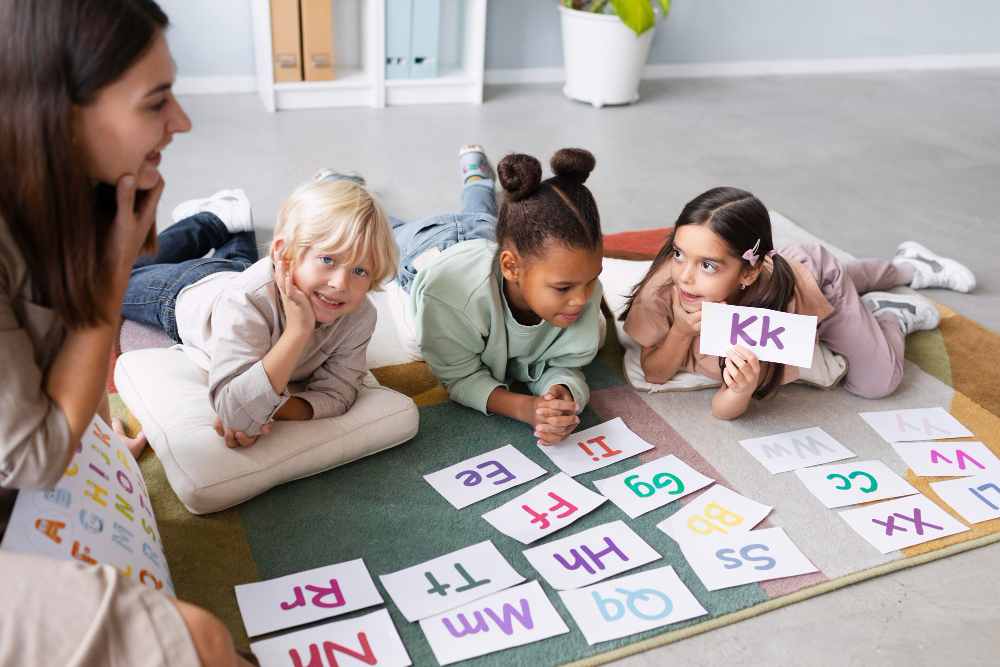
The earlier a child starts, the easier it tends to be. Children who begin before about age 10 are far more likely to reach native-like grammar and a natural accent than people who start later. That does not mean older kids miss out. Research shows the ability to learn grammar stays strong into the late teens, and children who start at 10, 12 or 14 can still become very capable speakers.
For most families, the practical answer is to start as early as you can and keep going. Steady exposure over years matters more than the exact starting age. Here is what the research says, what early learning looks like at different ages and how parents can support it.
What research says about age and language learning
One of the largest studies on the topic was published in the journal Cognition in 2018 by researchers at MIT and Harvard. About 670,000 people took an online English grammar quiz, and the researchers compared their scores with the age at which they started learning the language.
MIT’s summary of the study reports that the ability to learn grammar stays strong until about age 17 or 18, later than many scientists had assumed. The study also found that people who start learning after about age 10 are unlikely to reach native-speaker grammar, even though learners who start between 10 and 18 still pick up the language quickly.
Why young children pick up languages so well
Young children learn their first language through listening, play and daily routines, not through grammar lessons. A second language introduced early can follow the same path. Children absorb sounds, rhythm and common phrases naturally, often without realizing they are learning.
Young learners also tend to be less self-conscious. A preschooler will happily sing a song in Spanish or repeat a new word without worrying about mistakes. That willingness to try, repeat and play gives early learners plenty of practice.
Accent is another advantage. Children exposed to a language early are better able to hear and produce sounds that do not exist in their first language, which is one reason early starters often sound more natural.
What learning looks like at different ages
Toddlers and preschoolers (ages 1 to 5)
At this age, a second language works best through songs, stories, games, counting and simple greetings. The goal is familiarity and comfort with the sounds of the language, not fluency. Short, frequent exposure fits a young child’s attention span.
Kindergarten and early elementary (ages 5 to 8)
Children can now connect spoken words with written ones, learn vocabulary in themes such as colors, animals and family, and start using short phrases in conversation. Regular classes add structure, while songs and games keep it fun.
Upper elementary (ages 8 to 11)
Older children can handle basic grammar, simple reading and short writing tasks. They can also understand why a language is useful, which boosts motivation. A start at this age still gives a good chance of good pronunciation and solid grammar, especially with steady practice.
Middle school and beyond
Teens learn quickly and can use study strategies younger children cannot. They may need more effort to sound like a native speaker, but they can still become fluent with consistent practice and real conversation.
Common worries parents have
Will a second language confuse my child?
No. Children’s Hospital Los Angeles notes that bilingualism does not cause a language delay or disorder. Children learning two languages early may start talking slightly later than some peers, but they stay within normal limits, and their combined vocabulary across both languages is comparable to that of children learning one.
Is it a problem when my child mixes languages?
A sentence that mixes words from two languages, known as code-switching, is a normal part of bilingual development. Children often reach for a word in the other language when they have not learned it yet in the one they are speaking.
My child understands but will not speak. Is that normal?
Yes. Many children go through a quiet stage when they understand a lot of a new language but say very little. Speech usually follows as their confidence grows. If you have concerns about your child’s overall language milestones, talk with your pediatrician, who can refer you to a speech-language pathologist if needed.
How parents can support a second language at home
You do not need to speak the language yourself. Simple habits at home add up:
- Play music and children’s songs in the language during car rides or playtime.
- Read picture books in the language, or bilingual books with both languages on the page.
- Watch short children’s shows in the language together.
- Learn a few words and phrases alongside your child and use them in daily routines.
- Look for community events, story times or playgroups where the language is spoken.
- Keep it positive. Praise effort and avoid correcting every mistake.
Consistency matters more than intensity. Ten minutes of songs and stories several times a week will do more than one long session now and then.
Why Spanish is a practical choice in Las Vegas
For families in Las Vegas, Spanish is an especially useful second language. It is widely spoken across Southern Nevada, so children have chances to hear and use it outside of class, from neighborhood conversations to local businesses and community events. Real-world use keeps the language alive and gives children a reason to keep learning.
Second language learning at Candil Hall Academy
Candil Hall Academy includes weekly Spanish classes as part of its enrichment program, along with art, music and physical education. In our private elementary school program for grades 1 through 5, Spanish runs alongside a structured core curriculum, so language learning becomes a regular part of the school week.
Families who want to start earlier can begin with our preschool program for children ages 3 to 5, where play-based learning builds the listening and early literacy skills that make later language study easier.
Frequently asked questions
Is it too late for my 10-year-old to learn a second language?
No. Research shows grammar learning ability stays strong into the late teens. A later start can make a native-like accent harder, but older children can still become fluent with steady practice.
Can toddlers learn two languages at once?
Yes. Many children around the world grow up learning two languages from birth. Regular exposure to both languages through daily routines, songs and conversation works best.
Will learning Spanish slow down my child’s English?
Bilingual children may sometimes start talking slightly later, but they stay within normal limits. A second language does not cause a language disorder.
How often should a child practice a second language?
Short, frequent practice works best. A few minutes of songs, stories or conversation several times a week builds more than occasional long sessions.
Which second language should my child learn?
Choose a language your child will hear and use. In Las Vegas, Spanish is a practical choice because it is widely spoken in the community.
Conclusion
The best age to start a second language is early, ideally in the preschool or early elementary years, when children absorb sounds and grammar most naturally. Older children can still learn well, so the most important step is to start and stay consistent.
Candil Hall Academy serves Las Vegas families from toddlers through fifth grade. To see our classrooms and learn more about our enrichment program, schedule a tour or call 702.656.3370.