
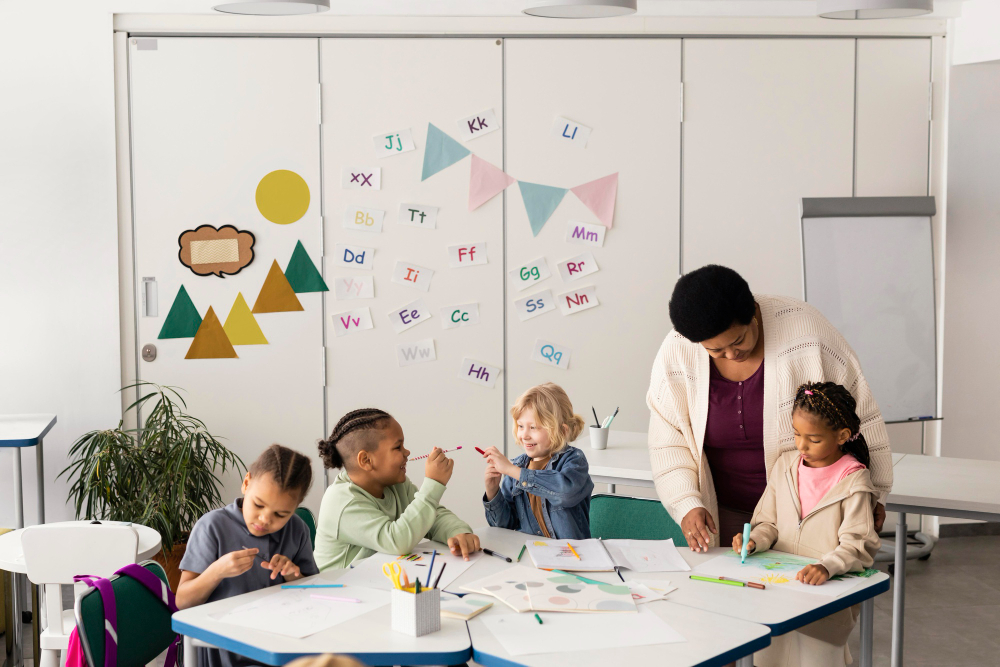
Almost every school brochure mentions small classes. Very few explain what, exactly, changes inside the room, and fewer still tell you the number.
This is one of the few areas in education where the evidence is unusually solid, and also one where the marketing language has drifted a long way from what parents think they are being told. Both are worth understanding before you choose.
When comparing the Best Private Schools, parents should look beyond the phrase “small class sizes.” Ask about the actual student-to-teacher ratio, how much individual attention students receive, classroom participation, and how teachers adapt instruction to different learning needs. A genuinely smaller class can create more opportunities for interaction, feedback, and personalized support.
What actually changes when a class is smaller
Class size is not really about square footage. It is about how a teacher’s finite attention gets divided.
In a room of twenty-four, a child might speak once in a lesson. In a room of twelve, the same child speaks several times, and the teacher hears each answer. That compounds over a school year into far more practice at explaining thinking out loud, which is how understanding gets built and misunderstanding gets caught.
Feedback arrives faster too. A teacher circulating among twelve desks reaches every child during independent work. At twenty-four, some children finish the whole exercise doing it wrong before anyone notices. Small classes shorten the distance between a mistake and the correction.
Behavior management also takes a smaller bite out of the day. Fewer transitions, fewer interruptions, and more minutes spent on the lesson itself. Our elementary program is structured around that, with class sizes kept intentionally small through fifth grade.
The evidence here is unusually strong
Most education claims rest on studies comparing schools where families chose differently. Class size is the rare case with a randomized experiment behind it.
Project STAR ran in Tennessee from 1985 to 1989 with roughly 11,600 students across 79 schools. Children and their teachers were randomly assigned within each school to a small class of 13 to 17, a regular class of 22 to 25, or a regular class with a full-time aide. Random assignment is what makes the results credible, because the small-class children were not the ones whose parents pushed hardest.
Students in the small classes outperformed their peers on standardized and curriculum-based tests. The pattern held across white and minority students and across inner-city, suburban, and rural schools. Fewer children were held back a grade, and struggling students were identified earlier.
The follow-up work matters more. Gains persisted after children returned to regular classes in fourth grade, and later analyses linked small-class assignment to graduating on schedule, enrolling in honors courses, and being more likely to attend college. Effects were roughly double for minority children in the early years, which is part of why early education in Nevada receives the attention it does.
Where the caveats sit
Two honest qualifications belong here.
The first is that reductions have to be real to matter. STAR compared classes of roughly 15 against roughly 23. A class trimmed from 26 to 24 is not the same intervention, and the research does not support expecting much from small adjustments.
The second is that class size interacts with teacher quality. When states have cut class sizes everywhere at once, the sudden demand for teachers has sometimes been met by hiring less experienced ones, which eats into the benefit. A small class with a strong teacher is the combination that works. A small class alone is only half of it.
Why the early grades matter most
STAR studied kindergarten through third grade deliberately. These are the years when children learn to read, and reading instruction is intensely individual. A teacher needs to hear each child decode, catch the specific sound they are stumbling over, and adjust on the spot.
That work does not scale. Twenty-four children learning to read need twenty-four separate diagnoses, and the arithmetic of a school day makes that close to impossible in a large room. Our kindergarten program treats the reading year as the one where individual attention pays the highest return.
There is a social dimension as well. A child who is quiet, anxious, or new can go unnoticed in a large group for weeks. In a small class, invisibility is not really available, which cuts both ways for a shy child but generally works in their favor.
What it looks like on an ordinary Tuesday
The abstract argument becomes concrete quickly when you watch a classroom.
A teacher notices a child has stopped writing and reaches them within a minute. Reading groups are genuinely grouped by level instead of split into two rough halves. A parent at pickup hears something specific about their child’s day, not a general report. Families on a tour tend to notice the noise level first, and our facility page shows how the rooms themselves are set up.
Student-teacher ratio is not the same as class size
This distinction is where most school marketing quietly misleads, and it is worth knowing before your next tour.
A student-teacher ratio divides total students by total teaching staff, which often includes specialists, aides, and sometimes administrators who hold teaching credentials. The resulting number can look impressively low while actual classrooms hold far more children. A school can honestly advertise a ratio of 10 to 1 and still seat 22 children with one teacher for most of the day.
Ask a different question. How many children are in the room for reading instruction? That single question, asked about the specific grade your child is entering, gets you the number that matters.
Frequently asked questions
What is considered a small class in elementary school?
The research points at the mid-teens. Project STAR used 13 to 17 as its small condition against 22 to 25 as regular, and that gap is roughly the size of difference where measurable effects appear.
How large are classes in Clark County public schools?
Averages generally fall in the low twenties for elementary grades, though the figure varies by grade level and by school.
Does class size matter more than teacher quality?
Neither one substitutes for the other. A strong teacher in a large class still outperforms a weak teacher in a small one, and the research is clear that the combination is what produces the best results.
Do smaller classes help every child, or only struggling students?
Benefits appeared across the board in the STAR data, with the largest gains among students who typically face the most barriers. Advanced learners benefit differently, through work matched to their level instead of aimed at a class average..
How small are the classes at Candil Hall Academy?
Small enough that teachers know each child’s pace and learning style within the first few weeks. The specific number varies by program and by age group, so ask for the current figure for your child’s grade when you visit or when you begin the enrollment process.
Conclusion
Small classes are not a guarantee of a good education. They are a condition that makes good teaching possible, by giving a teacher enough room to notice each child, respond quickly, and adjust before a small gap becomes a large one.
The evidence behind that is stronger than for almost anything else a school can point to, and the early elementary years are when it counts for the most.
Candil Hall has been teaching Las Vegas children for over a quarter century from the campus on N. Rainbow Blvd. Call 702.656.3370 or schedule a tour to see the classrooms during a normal school day, which tells you more than any number on a page.