
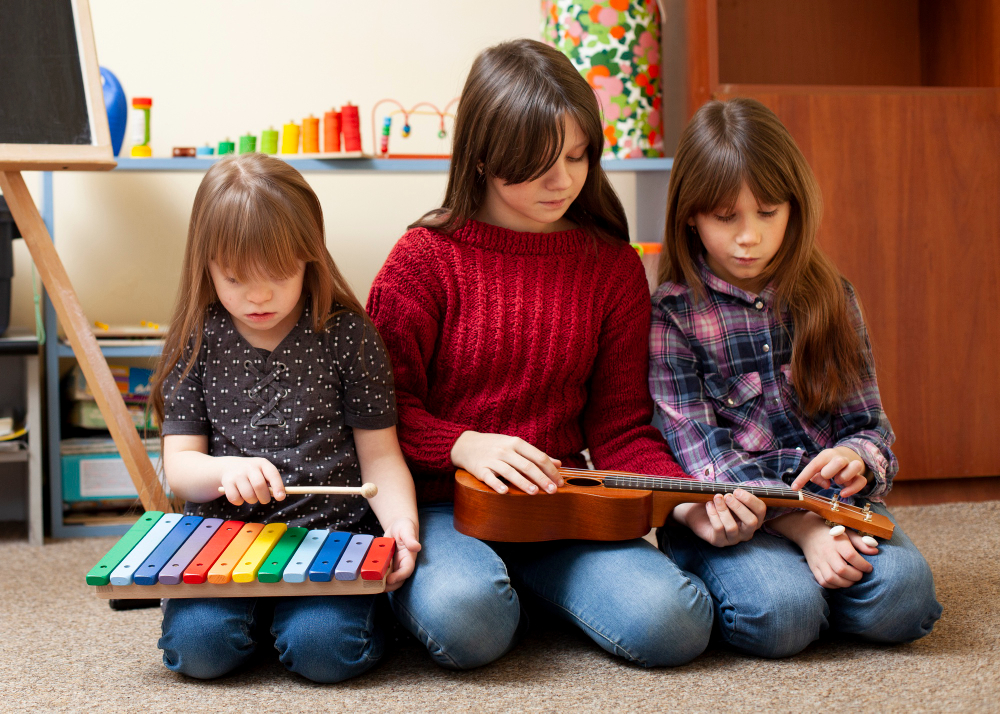
When a school budget tightens, art, music, Spanish, and physical education are usually the first subjects on the table. The reasoning sounds practical. Reading and math get tested, so protect those and trim around them.
That logic carries an assumption worth examining: that these subjects are decoration laid over a real education. Each one develops something that reading and math instruction never touches, and the elementary years are when those capacities are most available.
A Private School that protects art, music, language, and physical education alongside core academic subjects can provide children with a more balanced educational experience. These subjects can support creativity, communication, physical development, confidence, and collaboration while complementing traditional classroom learning.
The honest case is developmental, not academic
You will find claims that art classes lift test scores and that music makes children better at math. Some of that research is thinner than the headlines suggest, and we will come back to it.
The stronger argument is simpler. A child who spends every school day in the same two modes, decoding text and manipulating numbers, practices a narrow slice of what a person needs. Enrichment widens the slice. It also gives a child who struggles in a reading group somewhere to be genuinely good at something, and that changes how a child feels about school in general.
The schedule reveals what a school actually believes. At Candil Hall, every student attends weekly specials classes in art, music, and Spanish, because enrichment is not a reward for finishing the real work.
Art builds the hand and a tolerance for revision
Two useful things happen in an elementary art room.
The first is physical. Scissors, glue, a brush grip, a pencil held at different pressures. Fine motor control developed through art transfers to handwriting fluency, and handwriting fluency matters more than most parents expect. A child still wrestling with the mechanics of forming letters has less attention left over for the ideas they are trying to get onto the page.
The second is about disposition. Art is one of the few places in elementary school where the first attempt is expected to be revised. A painting gets adjusted. A drawing gets started over. Children absorb the idea that a rough first version is normal, which is precisely the attitude that later helps in writing and in mathematics.
Music, and what it asks of a seven-year-old
Music trains pattern recognition, working memory, and the ability to hold your own part while other people hold theirs. A child singing in a group has to keep their line steady while listening to everyone else.
We covered this ground in detail already in our post on the role of music in early childhood learning, so we will point you there instead of repeating it.
Spanish lands differently at six than at sixteen
Young children take on the sound system of a new language far more readily than teenagers do. Pronunciation and ear are the areas where an early start shows the clearest and most durable advantage. Vocabulary and grammar can be learned at any age, but sounding natural gets harder the longer you wait.
There is a practical case in Las Vegas too. Spanish is spoken widely across Southern Nevada, so a child who can greet a neighbor holds something immediately useful, not a subject that pays off in a decade.
Consistency makes this work. Weekly exposure across several years builds something real, while a single year tacked on in fifth grade rarely does. Our elementary program carries the same schedule through grade five.
P.E. does something for attention, not just fitness
The fitness argument is obvious enough. The attention argument is the one that gets overlooked.
Research on children and physical activity fairly consistently finds that a bout of moderate exercise improves attention and on-task behavior in the period that follows. Movement is not time subtracted from learning. For many children it is what makes the next block possible.
Motor skills matter on their own terms. Balance, coordination, throwing, and catching are learned rather than automatic, and children who never develop them tend to opt out of activity later. Our athletics program builds on that same foundation.
What the research does and does not support
Worth being straight here, because schools oversell this.
The Mozart effect, the claim that listening to classical music raises intelligence, did not survive replication. Studies showing arts students outperform their peers usually cannot separate the arts from the family circumstances that made the arts available. Correlation does a lot of quiet work in those headlines.
What holds up better is narrower and more useful: exercise improves attention in the short term, early exposure to a language benefits pronunciation, and fine motor practice supports handwriting. Then there is the outcome nobody publishes on. A child who wants to come to school because Tuesday is art class is present for everything else that happens on Tuesday.
Questions worth asking on a school tour
Any school can list art and music on a brochure. These questions separate a real program from a line item.
- How often does each subject meet, and is it weekly for every grade?
- Who teaches them, a specialist or the classroom teacher fitting it in?
- What happens to enrichment when a class falls behind in core academics?
- Is there dedicated space, or does art happen at the same desks?
- Where does physical education take place when the weather turns?
The second question tells you the most. Enrichment taught by someone trained in the subject looks nothing like enrichment squeezed into a Friday afternoon, which is why our faculty page lists who teaches what.
Frequently asked questions
Are specials just a break for the classroom teacher?
In a serious program, no. They are scheduled instructional time with their own objectives and their own teacher. The test is whether the school can tell you what your child is learning in art this term, not simply that art happens.
My child is behind in reading. Should that time go to tutoring instead?
Reading support matters, and it usually does not have to come out of enrichment. A struggling reader pulled from the one class where they feel capable often loses more in motivation than they gain in minutes.
How much Spanish will a child really learn in a weekly class?
Weekly instruction produces solid comprehension, working vocabulary, and good pronunciation over several years.
Does physical education take time away from academics?
The evidence points the other way. Schools that protect activity time generally do not see academic performance suffer, and attention in the classroom afterward tends to improve.
How often are these classes held at Candil Hall?
Art, music, and Spanish are weekly for every student from toddlers through fifth grade. Physical education, keyboarding, and digital literacy are part of the program as well, and the specific schedule varies by age group.
Conclusion
Art, music, Spanish, and physical education are not the reward for finishing the important subjects. They develop the hand, the ear, the body, and the willingness to try again after a poor first attempt. A child gets one run at elementary school, and these are the years when that comes most easily.
Candil Hall Academy has served Las Vegas families for more than 25 years from our campus at 5348 N. Rainbow Blvd. Tours run Monday through Friday and take about 30 to 45 minutes. Call 702.656.3370 or schedule a tour, and bring your child along if you can.